In the competitive and volatile Tri-State commercial market (NY, NJ, CT), asset protection is paramount. While water damage is the silent killer, high wind is the catastrophic threat.
Commercial flat roofs, especially those topping high-rise and exposed buildings across the NYC boroughs, coastal New Jersey, and Connecticut, are uniquely susceptible to wind uplift—a powerful negative pressure that can literally peel a membrane or roof system off the structure during severe weather events.
While discussions often center on extreme High-Velocity Hurricane Zones (HVHZ) like Miami-Dade, the reality is that the Tri-State area demands similarly rigorous standards for wind resistance, driven by regional microbursts, Nor’easters, and hurricane remnants. Choosing the right system is not just about material; it’s about installing engineered roofing for storms that meets or exceeds local building codes.
In This Essential Technical Guide, You Will Learn:
- The Physics of Wind Uplift: Why flat commercial roofs are uniquely vulnerable to negative pressure during storms, unlike pitched roofs.
- The Regulatory Imperative: Understanding why regional codes mandate high wind resistance, even outside of traditional hurricane zones.
- System Selection for Protection: Key differences between ballasted, mechanically fastened, and fully adhered systems for maximizing commercial flat roof wind uplift resistance.
- High-Durability Materials: Which modern membrane and coating technologies are engineered to withstand the toughest regional wind and weather conditions.
- Anchoring and Flashing: Why the weakest points of your roof require specialized attention to prevent catastrophic failure.
I. Understanding Wind Uplift: The Invisible Threat
Wind damage on a commercial roof rarely occurs because the wind pushes down on the surface. Instead, wind uplift is caused by the negative pressure created as air flows over the edge of the building and across the roof surface, generating a vacuum effect similar to an airplane wing.
This force is strongest at the edges, corners, and perimeter of the roof, demanding that engineered roofing for storms must feature superior anchoring systems in these zones. If the system fails here, the wind gains leverage and can rapidly peel away large sections of the membrane or insulation.
II. Selecting High-Durability Roofing Materials
A successful wind uplift strategy begins with selecting the right materials and the correct installation system.
A. System Selection for Maximum Resistance
The method used to secure the membrane to the deck directly dictates the roof’s uplift resistance. The most common commercial flat roof systems include:
| System Type | Description | Wind Uplift Resistance Benefit |
| Fully Adhered Systems | The membrane is fully glued directly to the insulation board or deck. | Provides uniform resistance across the entire surface, minimizing vulnerable points. Often required for high-wind areas. |
| Mechanically Fastened Systems | The membrane is secured to the deck using specialized fasteners and plates. | Must meet stringent manufacturer’s specifications on fastener density (spacing) to achieve the required uplift resistance rating.2 |
| Ballasted Systems | Loose material (like river rock or gravel) holds the membrane down, relying on weight, not chemical adhesion or mechanical anchors. | Less common in high-wind zones, as the ballast itself can become hazardous debris during severe storms. |
The product approval for any system must state the allowable uplift resistance for the attachment system, which must be equal to or greater than the design uplift pressure required for your building’s height and location.
B. Advanced Membrane Technology
Beyond the anchoring system, the membrane itself must be a high-durability roofing material. Modern advancements are leading to more flexible and resilient membranes, including advanced membrane technologies that resist tearing, cracking, and deterioration from extreme temperature cycling and UV exposure, further mitigating wind’s ability to compromise the surface.
III. Mastering the Details: Edge and Perimeter Integrity
The failure of a commercial roof due to wind uplift almost always starts at the edges, corners, and flashing—areas where the roofing system transitions or meets vertical structures.
A. Flashing and Penetrations
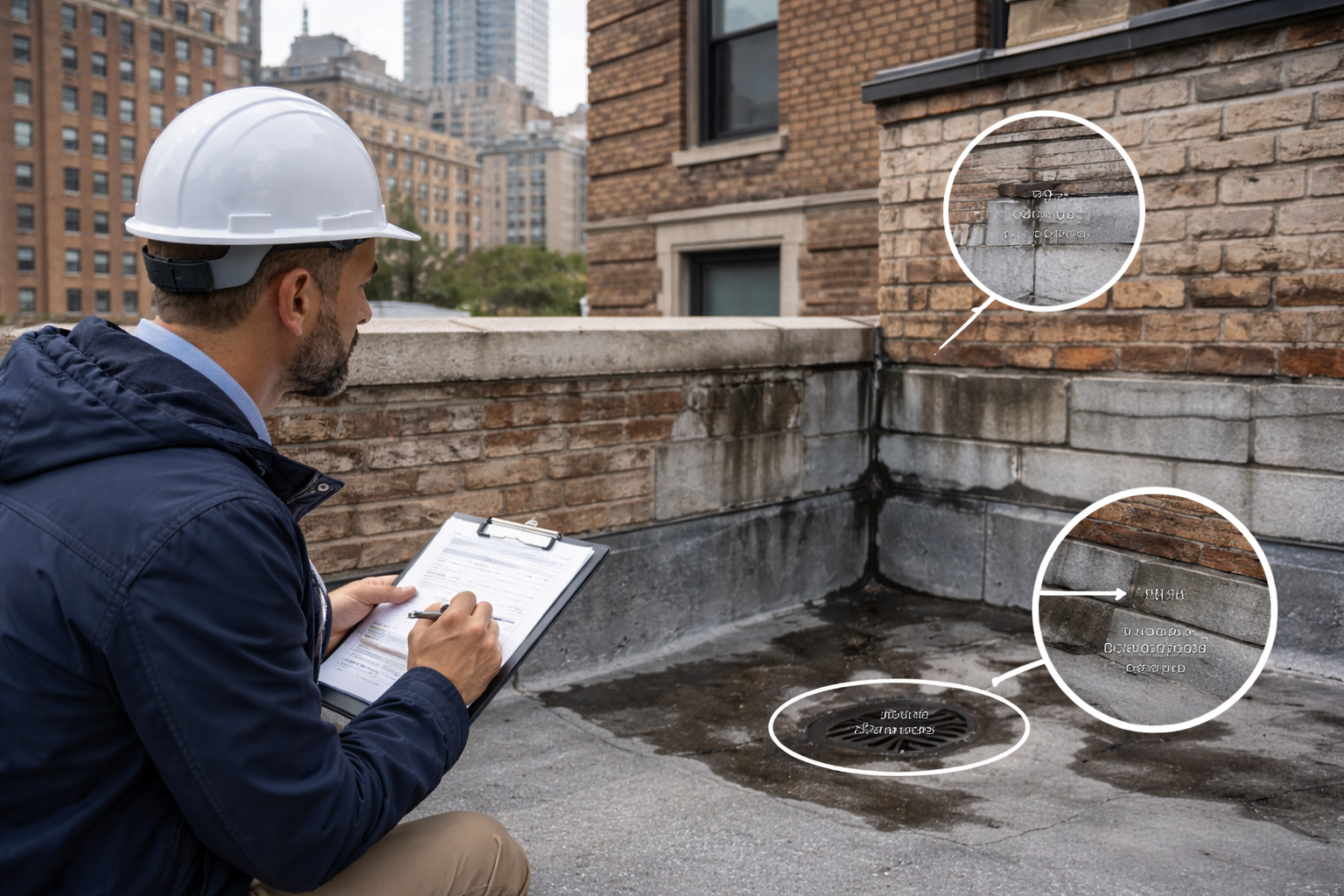
Flashing around HVAC units, pipes, chimneys, and parapet walls are chronic weak points. These areas are vulnerable to both water ingress and wind penetration. Proper, professional installation is non-negotiable to ensure the material remains securely fastened under pressure.
B. Tri-State Code Compliance
While the Tri-State area may not have the blanket regulations of a High-Velocity Hurricane Zone (HVHZ), every commercial roofing project is subject to local building codes that prioritize wind resistance, fire rating, slope, and drainage.1 Working with a contractor experienced in the specific regulatory requirements of NYC, Bergen County, or Fairfield County ensures your new system is engineered to last for decades against the region’s specific storm profiles.
For a long-term solution that provides maximum commercial flat roof wind uplift resistance, trust a firm that engineers for the worst. Contact CHK Construction today to schedule a consultation on high-durability roofing systems for your commercial asset.