I have spent years evaluating commercial and residential properties across the Tri-State area with the team at CHK Construction. If there is one thing that catches property owners off guard every single year, it is the damage left behind by winter.
You survived the blizzards, the ice storms, and the plummeting temperatures. But now that the snow has melted, the real test begins. The seasonal freeze-thaw cycle is brutal on buildings in our region. Moisture gets into tiny cracks, freezes, expands, and slowly tears masonry and roofing materials apart. Often, the damage does not become visible until the spring thaw.
I talk to property owners every week who know they need to check their building, but simply do not know where to start. Treating winter damage proactively rather than waiting for a major leak or structural failure saves you tens of thousands of dollars. Today, I am going to walk you through the exact building inspection checklist NYC, NJ, and CT property managers need to follow to secure their investments this spring.
Why the Freeze-Thaw Cycle is Your Building’s Worst Enemy?
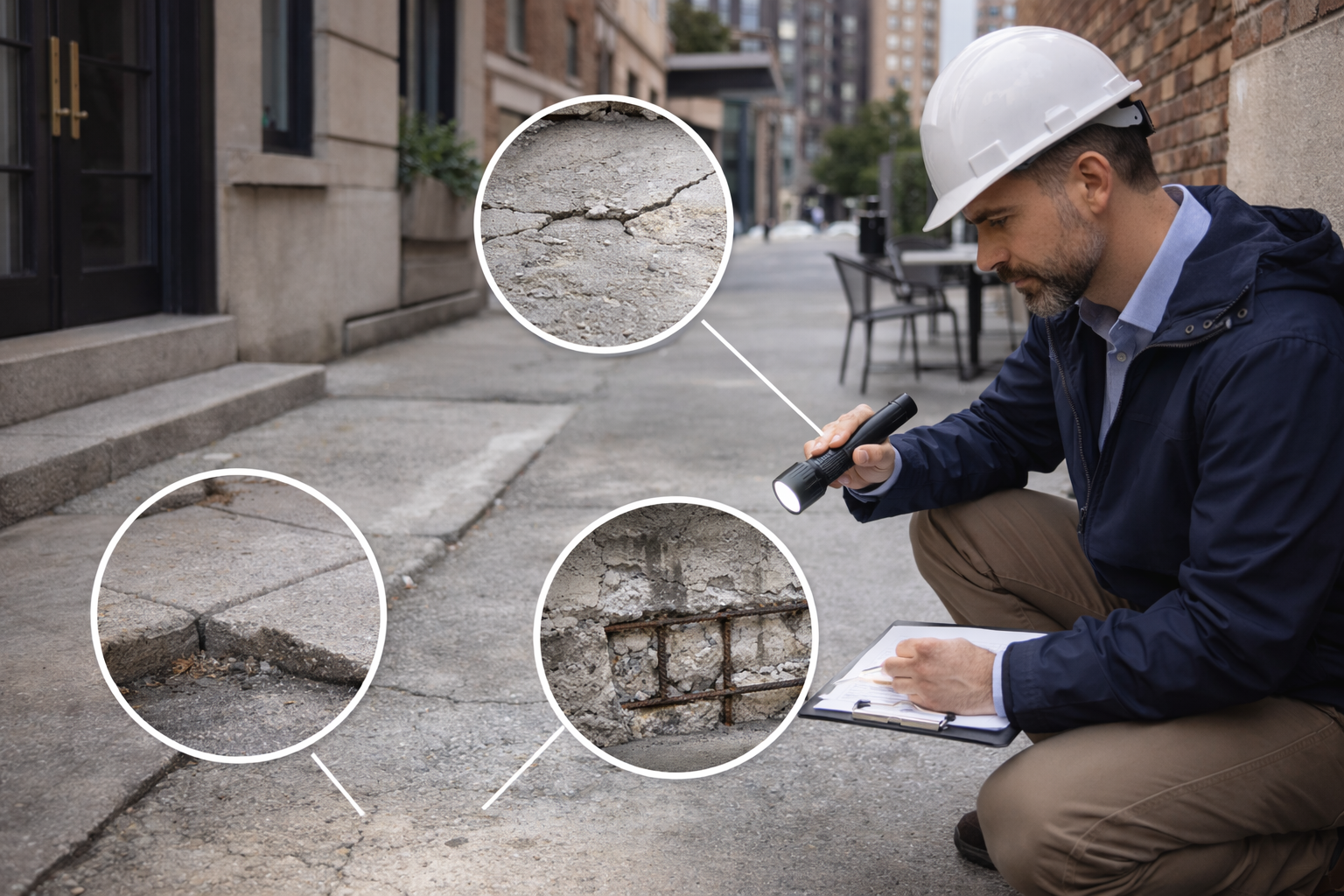
In the Northeast, temperatures frequently fluctuate above and below the freezing mark from December through March. When rain or melting snow seeps into the microscopic pores of brick, concrete, or roofing membranes, it sits there. When the temperature drops overnight, that trapped water freezes and expands by about 9%.
This constant expansion and contraction acts like a microscopic jackhammer. Over a single winter, it can turn a hairline crack into a significant structural vulnerability. That is why the spring property maintenance in NYC and surrounding areas requires is not just about aesthetics: it is about structural integrity and liability.
Your Comprehensive Spring Building Checklist
If you want to catch these issues early, you need a systematic approach. Here is what we look for when we conduct a thorough evaluation of your property.
1. The Exterior Envelope and Masonry
Your facade is your building’s first line of defense. Moisture intrusion here can lead to massive internal damage.
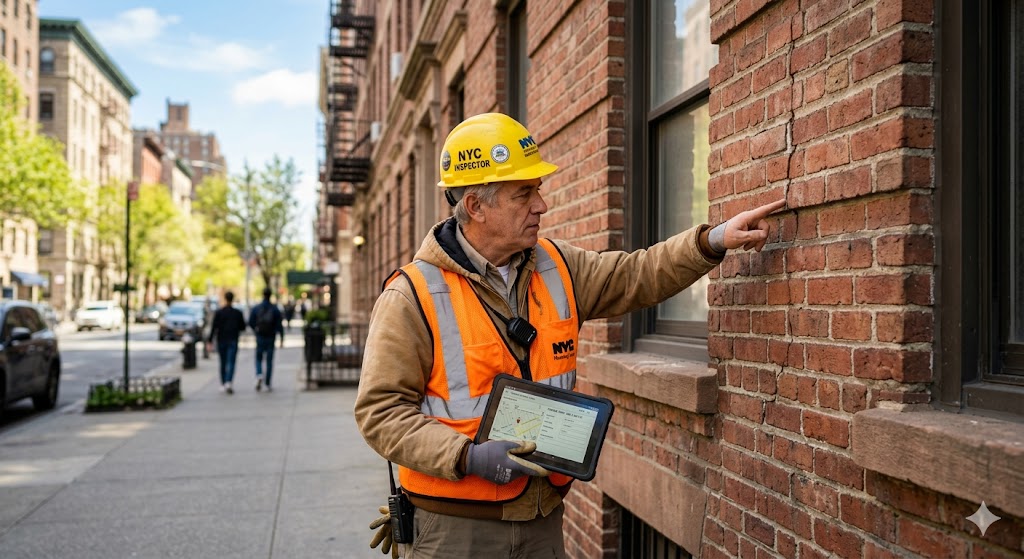
- Check for Spalling: Look for bricks or concrete blocks that are flaking, cracking, or popping off. This is a classic sign of freeze-thaw damage.
- Evaluate Mortar Joints: Missing or crumbling mortar (pointing) allows water to penetrate directly into the wall cavity.
- Look for Efflorescence: White, powdery stains on your masonry mean water is moving through the wall and leaving salt deposits behind.
2. Roof Systems and Water Management
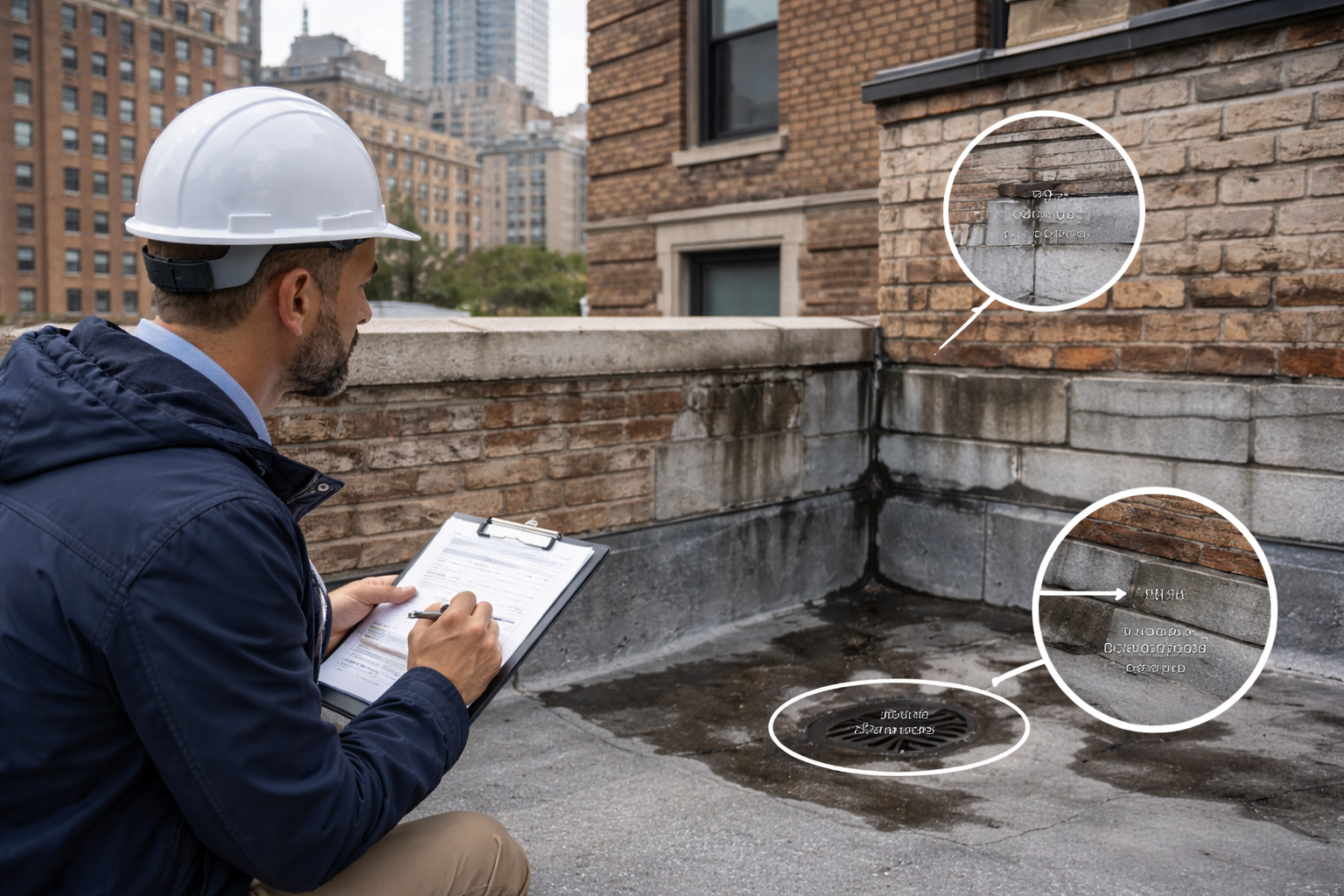
A compromised roof will destroy a building faster than almost anything else. A proper facade and roof inspection of NYC properties must prioritize water diversion.
- Clear the Drainage: Winter winds fill gutters, scuppers, and drains with debris. If water pools on your roof because it cannot drain, it will eventually find a way inside. First Class Management
- Inspect Membrane Seams: Check for blistering, cracking, or lifting along the seams of flat roofs.
- Examine Flashing: The metal flashing around parapet walls, chimneys, and HVAC units often pulls away during extreme temperature swings.
3. Windows, Doors, and Sealants
Window perimeters are notorious for failing after a hard winter.
- Test Caulking and Sealants: Cold weather makes sealants brittle. Check the perimeter of all windows and doors for shrinking, cracking, or missing caulking.
- Check Weatherstripping: Drafts not only cost you money in HVAC inefficiency but also indicate paths for moisture.
- Look for Window Condensation: Fog or moisture between double-pane glass indicates that the thermal seal has broken.
Partnering with a Local Expert
While walking your property and performing a visual check is a great first step, some damage is invisible to the untrained eye. Structural anchors, hidden lintel rust, and microscopic roof tears require professional assessment.
As a trusted construction company NYC property owners rely on, CHK Construction specializes in identifying and repairing these exact seasonal vulnerabilities. We know the specific building codes and climatic challenges of New York, New Jersey, and Connecticut. Bringing in an expert team ensures that minor winter wear and tear does not evolve into a massive summer repair project.
FAQ
What causes facade damage after winter?
The most common cause of facade damage is the freeze-thaw cycle. When moisture penetrates small cracks in the masonry or sealant and freezes, it expands. This expansion forces the cracks to widen, leading to spalling bricks, failing mortar, and eventual water intrusion into the building interior.
Facade Repair NYC
How often should a building facade be inspected in NYC?
While we highly recommend a visual inspection every spring, New York City legally mandates strict inspections under the Facade Inspection and Safety Program (FISP), formerly known as Local Law 11. Under FISP, buildings taller than six stories must undergo a detailed inspection by a Qualified Exterior Wall Inspector (QEWI) every five years to ensure public safety.
Rimkus Consulting Group
When is the best time of year to schedule facade and roof repairs?
Spring and early summer are the ideal times to schedule repairs. The weather is stable enough to allow materials like mortar, concrete, and exterior sealants to cure properly without the threat of freezing. Catching the damage in the spring also ensures your building is watertight before the heavy summer rainstorms arrive.
Facade Repair NYC
Don’t Let Winter Damage Linger
Your property took a beating this winter, but you do not have to let that damage dictate your budget for the rest of the year. By following this checklist and addressing minor issues immediately, you protect your tenants, preserve your property value, and avoid catastrophic repair bills.
Do not wait until a small leak becomes a major structural issue. Contact CHK Construction today to schedule your comprehensive spring building evaluation. We are here to ensure your property remains safe, compliant, and structurally sound for the seasons to come.