If I own or manage a property in New York City, I can usually tell when “something concrete-related” needs attention. What is harder to tell is what kind of concrete work the property actually needs.
Is it a sidewalk issue? A floor slab problem? A parking or loading-area deterioration issue? Or is it something more serious that points to structural repair rather than surface-level patching?
That confusion is common. Many owners know they need concrete repair NYC services, but they are not sure whether the problem is mostly cosmetic, clearly safety-related, or potentially structural. And in NYC, getting that call wrong can cost more than money. It can affect liability, tenant experience, access, and, in some cases, city compliance. NYC311 states that property owners are responsible for maintaining, repairing, and installing the sidewalks next to their property, and the city can issue sidewalk violations for defects such as holes, broken flags, or uneven sections.
For CHK Construction, this topic fits the company’s positioning directly. CHK says it has served the tri-state area for over 25 years and offers concrete, facade restoration, roofing, and related exterior construction services for residential and commercial properties.
Why Property Owners Misread Concrete Problems?
From my experience, concrete issues get misread because the visible symptom is not always the real category of the problem.
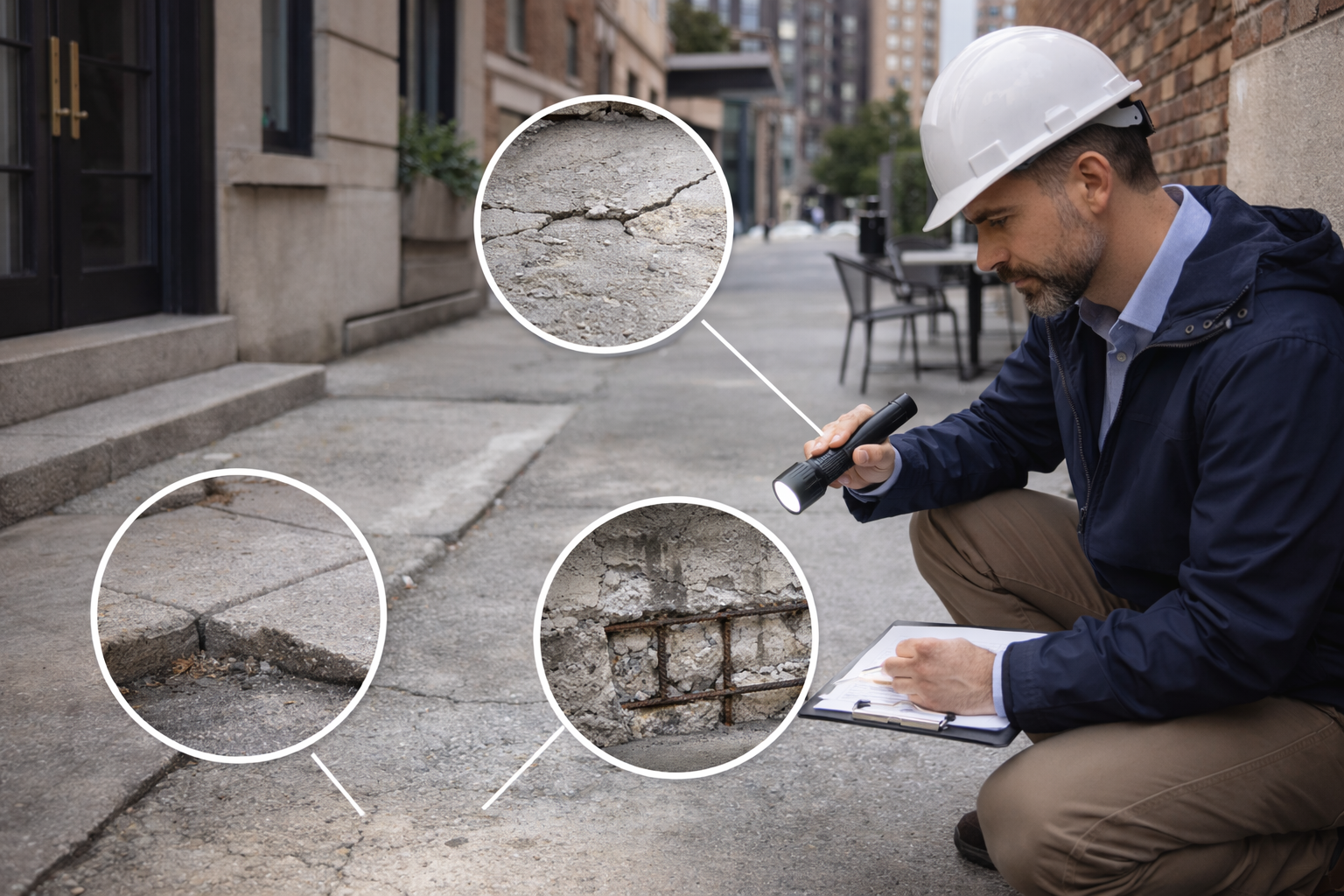
A crack might be harmless shrinkage, or it might reflect movement. A sunken sidewalk flag might look minor, but it still qualifies as a trip hazard. A spalled slab may seem cosmetic at first, but if the deterioration is exposing reinforcing steel or getting worse under traffic, it is no longer just a surface blemish. CHK’s recent content on concrete spalling in parking structures reinforces that concrete deterioration often has underlying causes and can progress if not addressed early.
That is why I do not like to start with “How much to patch this?” I start with, “What type of concrete problem is this actually?”
First Category: Sidewalk Concrete Repair
If the issue is outside the building and part of the pedestrian path, I start by thinking about sidewalk concrete repair NYC.
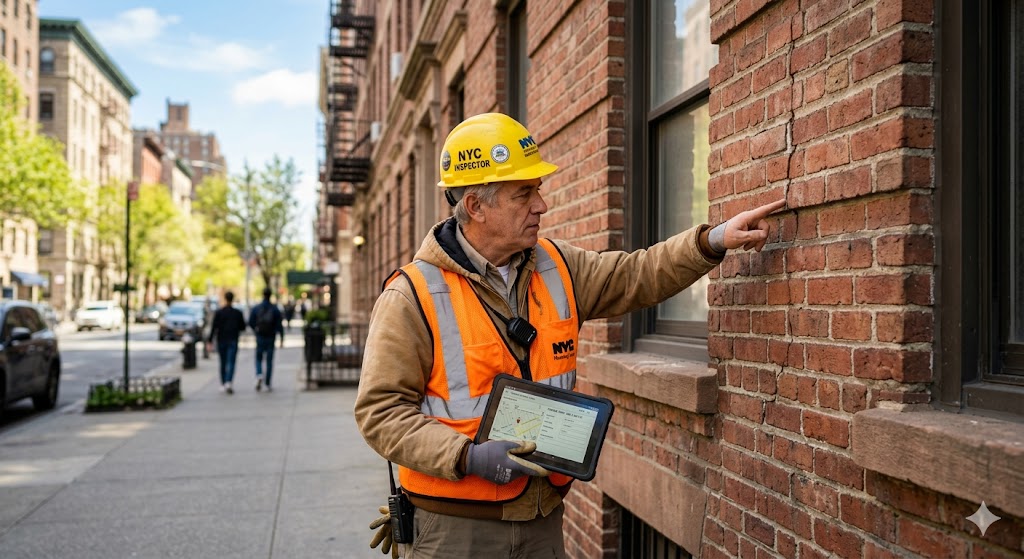
In New York City, this category matters a lot because sidewalk conditions are not just appearance issues. They are safety and owner-responsibility issues. NYC311 says owners are responsible for adjacent sidewalks, and even relatively small defects can qualify for enforcement. The city notes that holes as small as 1 inch in diameter or sidewalk sections raised as little as 1/2 inch can create injury risk.
The NYC Administrative Code also defines sidewalk defects to include conditions like:
- cracked flags where pieces may loosen
- loose or rocking flags
- visible voids underneath
- trip hazards where adjacent flags differ in height by 1/2 inch or more
Signs I’m dealing with sidewalk repair, not structural repair
I usually put the issue in the sidewalk category if I see:
- raised or uneven sidewalk flags
- cracked pedestrian panels
- rocking or seesawing sections
- localized settlement near the curb or entry
- trip-hazard conditions
- broken concrete around tree-root pressure or wear
This is where a concrete contractor NYC owners hire for sidewalk work needs to think not only about replacement quality, but also about code compliance, pedestrian safety, and proper flag reconstruction.
Second Category: Slab Repair
When the issue is on a floor surface, garage deck, loading area, terrace, basement slab, or other horizontal concrete plane that is not simply a public sidewalk, I start thinking about slab repair.
A slab problem often shows up as:
- surface cracking
- spalling
- scaling
- ponding or uneven wear
- delamination
- broken edges
- deteriorated traffic-bearing surfaces
This category is common in:
- commercial interiors
- warehouses
- parking areas
- loading zones
- basements
- mechanical rooms
- terraces and podium decks
CHK’s service positioning around concrete work and its related waterproofing and exterior restoration experience make that broader kind of commercial slab evaluation especially relevant. CHK also recently published technical content about below-grade waterproofing in NYC buildings, which matters because some slab issues are worsened by moisture migration rather than simple wear alone.
When slab damage may still be mostly surface-level
Some slab problems are still repairable as non-structural or limited-scope work when:
- cracking is minor and stable
- spalling is shallow
- wear is concentrated in the top surface
- there is no obvious sign of steel exposure or movement
- the issue is localized rather than spreading rapidly
In those cases, the right fix may still be substantial, but it is not necessarily structural rehabilitation.
Third Category: Structural Concrete Repair
This is the category property owners are often most worried about, and for good reason.
Structural concrete repair is where I stop thinking mainly about finish, usability, or isolated surface deterioration and start thinking about load, integrity, and ongoing building performance.
I start to suspect structural-level concerns when I see:
- deep cracking that appears active or widening
- exposed or rusting reinforcing steel
- large areas of delamination or spalling
- recurring movement
- slab edge failure
- beam, column, lintel, or support distress
- sagging, settlement, or displacement patterns
- concrete damage tied to water infiltration and steel corrosion
This is where commercial concrete work NYC becomes much more than a patching exercise. If the damaged concrete is part of a structural system, the repair approach has to match that reality.
How to Tell Cosmetic Concrete Issues From Safety Issues?
This is usually the first distinction an owner wants to make.
Cosmetic issues
I think of the problem as more cosmetic when it is limited to appearance and does not yet create a meaningful safety, stability, or water-intrusion concern. That may include:
- minor surface discoloration
- very shallow crazing
- isolated finish wear
- small non-progressive blemishes
Safety-related issues
I shift into safety mode when the condition could injure someone or create a liability problem. In NYC sidewalks, the city’s own criteria make this especially clear: a 1/2-inch height differential between flags or a hole of about 1 inch can already become a violation issue.
Examples include:
- trip hazards
- broken walking surfaces
- loose sidewalk sections
- crumbling concrete at entrances
- unstable stair or landing surfaces
- deteriorated parking or loading surfaces affecting access
Structural issues
I reserve this category for cases where the concrete damage may reflect or affect the performance of the actual structural system, not just the walking or wearing surface.
Sidewalk Repair Is Often About Liability as Much as Damage
One reason sidewalk concrete repair NYC needs fast attention is that the city clearly places sidewalk responsibility on the adjacent property owner. NYC311 says owners are responsible for maintaining and repairing those sidewalks, and the code clarifies that owners are generally responsible for the cost of repairing the defective sidewalk flags ordered by the department, not necessarily replacing an entire sidewalk when only certain flags are defective.
That means if I see:
- one flag lifted higher than the next
- broken corners where pieces can come loose
- rocking flags
- open voids underneath
I do not treat that as something to defer indefinitely.
This is one of the clearest situations where a good concrete repair NYC strategy can help avoid a bigger violation or injury problem later.
Slab Damage Often Has a Hidden Cause
A lot of slab problems are not just “old concrete.”
They may be connected to:
- water intrusion
- freeze-thaw cycling
- deicing salts
- poor drainage
- heavy traffic loads
- substrate movement
- corrosion of embedded steel
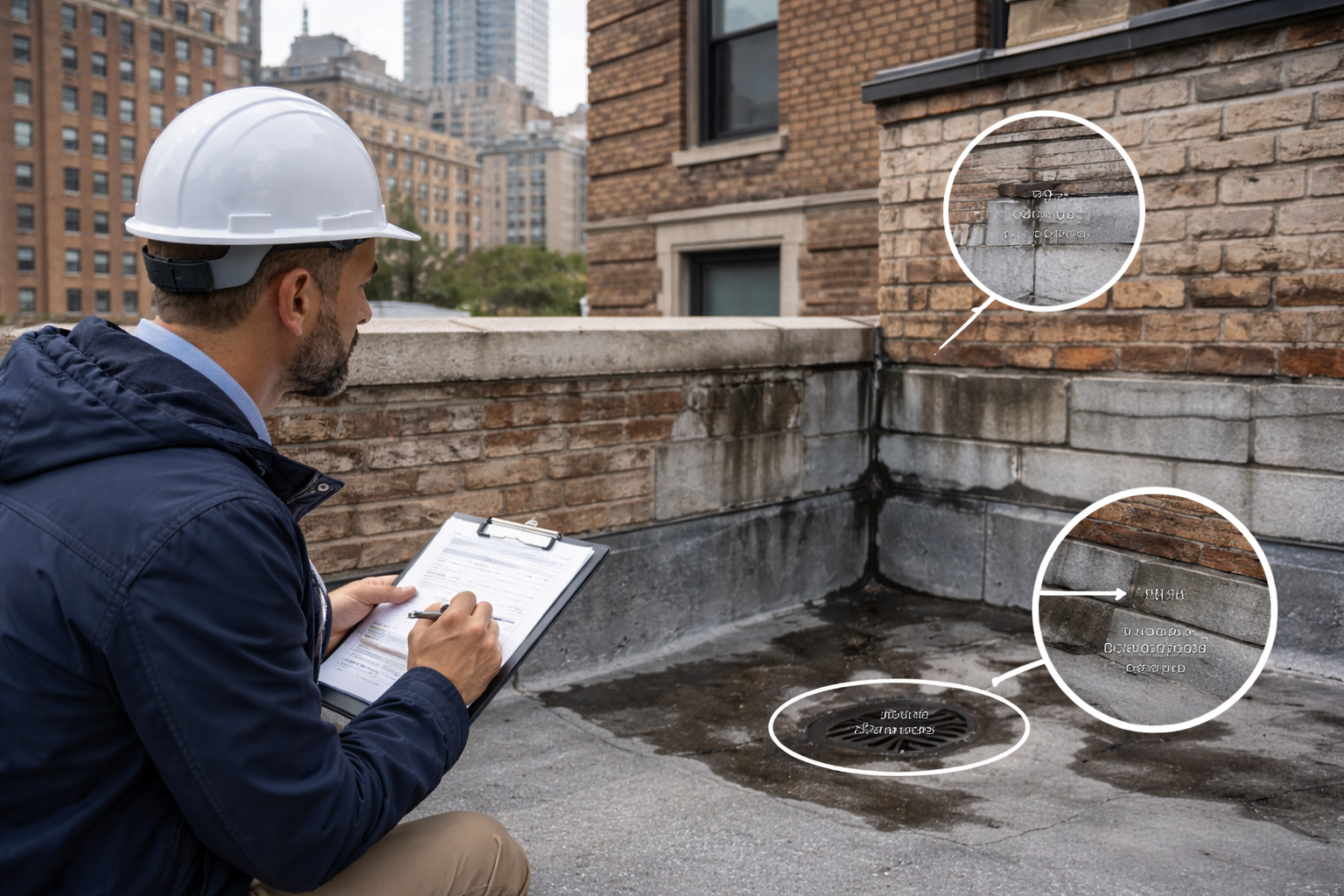
That is why CHK’s mix of concrete, roofing, and waterproofing experience is worth noting. Water and concrete distress often overlap, especially in terraces, podiums, garages, and below-grade spaces. CHK’s published article on below-grade waterproofing emphasizes how moisture pressure and limited exterior access can complicate repair conditions in NYC buildings.
If I only patch the visible damage without understanding why the slab is deteriorating, I may just be resetting the countdown to the next repair.
When Commercial Properties Need a Different Approach
Commercial buildings usually need a broader lens than a small residential patch job.
In commercial concrete work NYC, I may be dealing with:
- loading docks
- parking structures
- retail entry slabs
- warehouse floors
- podium decks
- mechanical-room slabs
- exterior plazas or walkways
- tenant-access areas that cannot stay out of service long
That means repair decisions are not only about “Can it be fixed?” They are also about:
- access
- phasing
- safety during occupancy
- durability under traffic
- coordination with other trades
- whether water or structural concerns are part of the same scope
CHK positions itself as serving both residential and commercial projects across the tri-state area, which is important because the repair planning for a sidewalk flag is not the same as the planning for a traffic-bearing slab or structural concrete section.
Questions I Would Ask to Identify the Right Type of Concrete Work
When I am trying to figure out what category a concrete issue belongs to, I start with a few practical questions.
Is this on a public-facing pedestrian surface?
If yes, I immediately think sidewalk liability and sidewalk concrete repair NYC.
Is the concrete carrying foot traffic, vehicle traffic, or structural load?
That helps separate surface work from heavier-duty slab or structural concerns.
Is the issue just visible on the surface, or is concrete actually breaking apart?
Superficial wear and true material loss are not the same thing.
Are there signs of movement or instability?
If sections are lifting, rocking, or settling, the issue is no longer just cosmetic.
Is there water involved?
If yes, I start widening the scope to include drainage or waterproofing factors.
Is reinforcing steel exposed or rusting?
That is one of the biggest signs that the work may be moving into structural territory.
Where CHK Construction Fits?
Based on its site, CHK Construction is positioned as a strong fit for owners trying to sort out these differences because it does not present itself as only one narrow trade. The company highlights concrete, facade restoration, roofing, remodeling, and related exterior and structural-envelope work across NYC and the tri-state region. CHK also publishes NYC-focused content around violations, waterproofing, and concrete deterioration, which suggests it is used to looking at property conditions in a broader building-performance context.
For an owner, that matters. The wrong contractor mindset can turn every issue into the same kind of job. A better approach is to identify whether the property needs:
- sidewalk replacement
- slab restoration
- structural concrete repair
- or some combination tied to moisture or envelope conditions
Final Thoughts
If I own a property in New York City and I know I need concrete work, the most important first step is not guessing the repair price. It is figuring out what kind of concrete work the property actually needs.
A sidewalk problem is usually a safety and compliance issue.
A slab problem is often a wear, traffic, moisture, or surface-performance issue.
A structural concrete problem is a building-integrity issue.
And those are not interchangeable.
NYC’s sidewalk rules make it clear that even relatively small defects can become the owner’s responsibility, including holes around 1 inch and height differences around 1/2 inch between adjacent flags.
So whether I am dealing with a cracked walkway, a deteriorated slab, or a more serious structural concern, I want the work categorized correctly from the start. And based on its current site and service mix, CHK Construction is positioned to help owners in exactly that kind of situation.