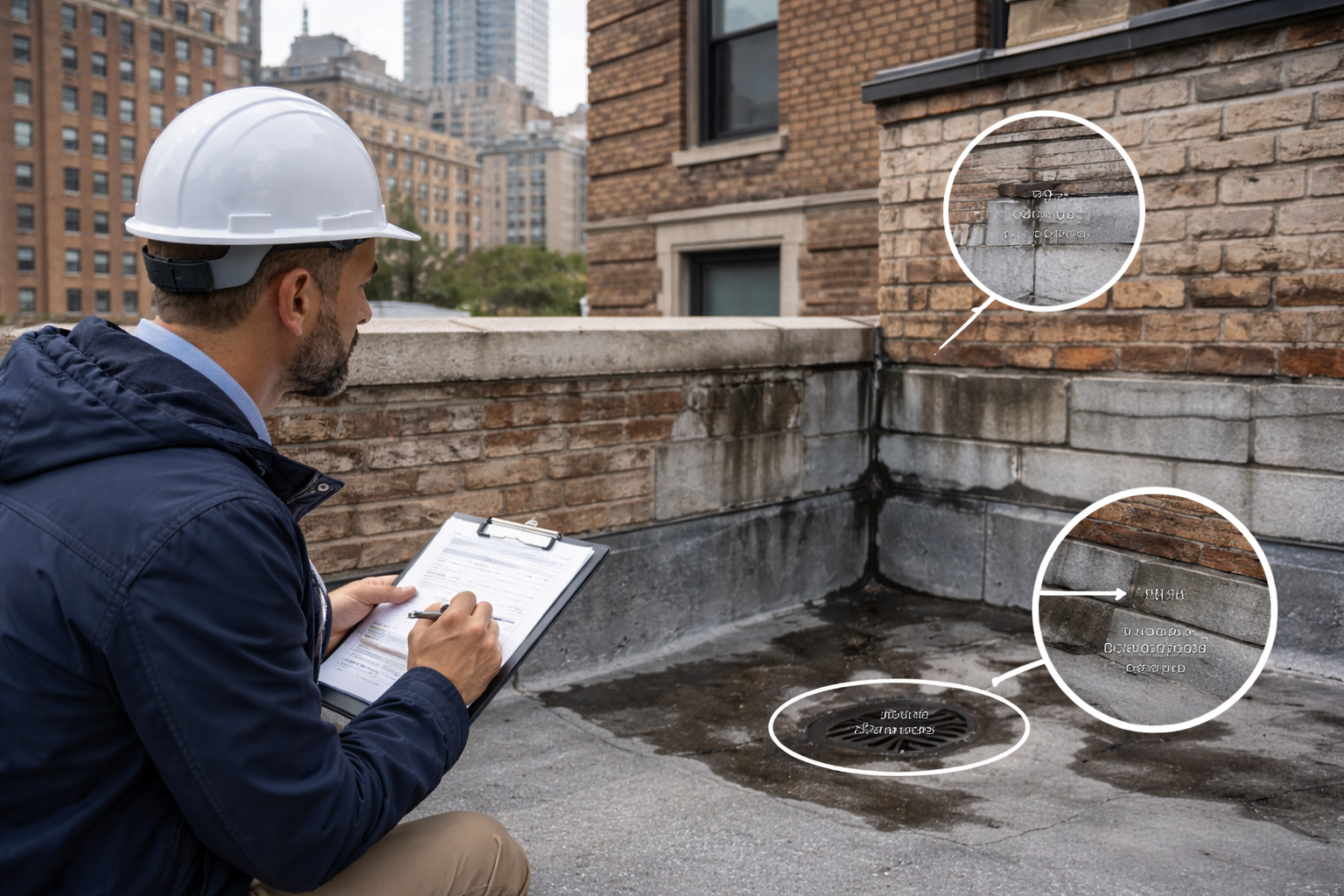
If I own or manage a property in New York City, one of the most expensive mistakes I can make is assuming facade damage will always be obvious before it becomes serious.
It usually is not.
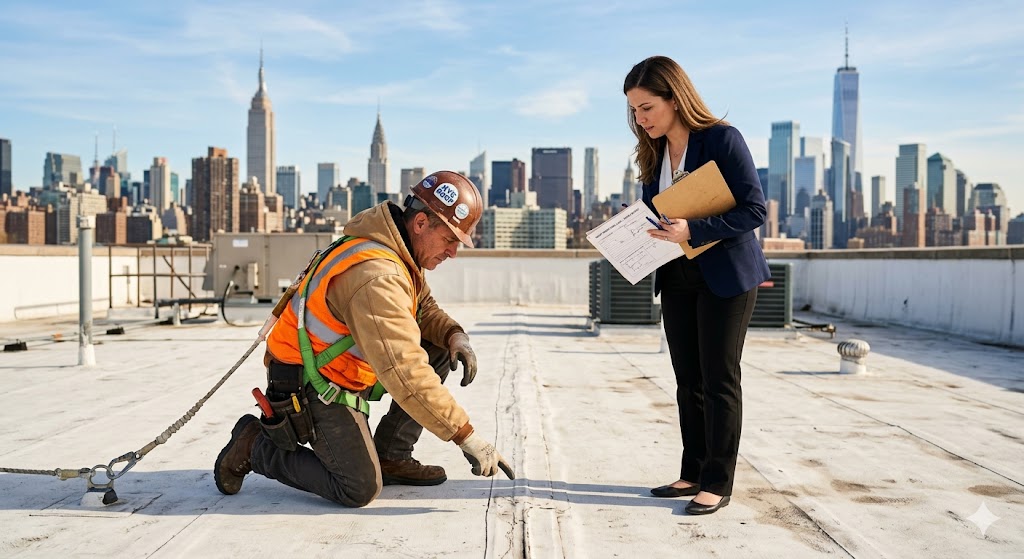
In many cases, the earliest warning signs are subtle: a hairline crack near a window lintel, staining that keeps coming back after rain, mortar joints that look a little more open than they did last year, or sealant around openings that has started to split and shrink. Those details are easy to ignore when the building still “looks fine” from the sidewalk. But in NYC, small exterior problems have a way of turning into bigger repair scopes if they are not caught early. That is especially important because buildings taller than six stories must comply with the city’s Façade Inspection & Safety Program, which requires exterior wall inspections and technical report filing every five years.
For CHK Construction, this topic fits the company’s positioning directly. CHK says it has served the tri-state area for over 25 years and offers facade restoration, masonry, concrete, roofing, and exterior-related construction services, including help with NYC facade and violation issues.
Why Facade Problems Get Missed So Often?
From my experience, owners and managers usually do not miss facade issues because they are careless. They miss them because exterior deterioration often starts gradually and looks cosmetic before it looks costly.
That is what makes facade restoration NYC work so reactive on many buildings. By the time people take the signs seriously, water has already been getting in, masonry units may already be loosening, and a relatively targeted repair may have grown into a much larger building exterior repair NYC project.
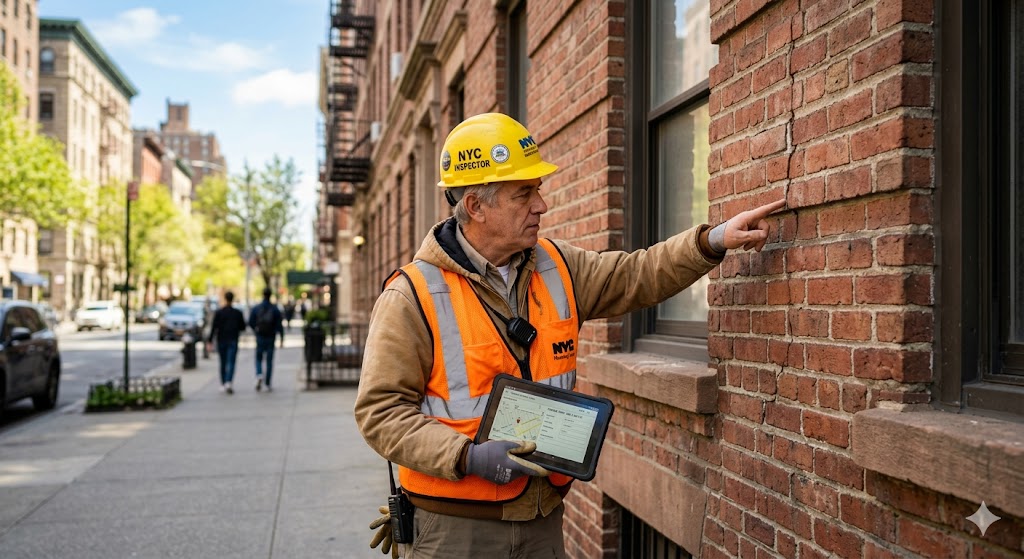
In NYC, that risk is not just about appearance. The Department of Buildings says exterior walls and appurtenances on buildings over six stories must be inspected under FISP to keep buildings safe, and unsafe conditions can trigger mandatory protections and filings.
The First Warning Sign I Watch For: Hairline Cracks
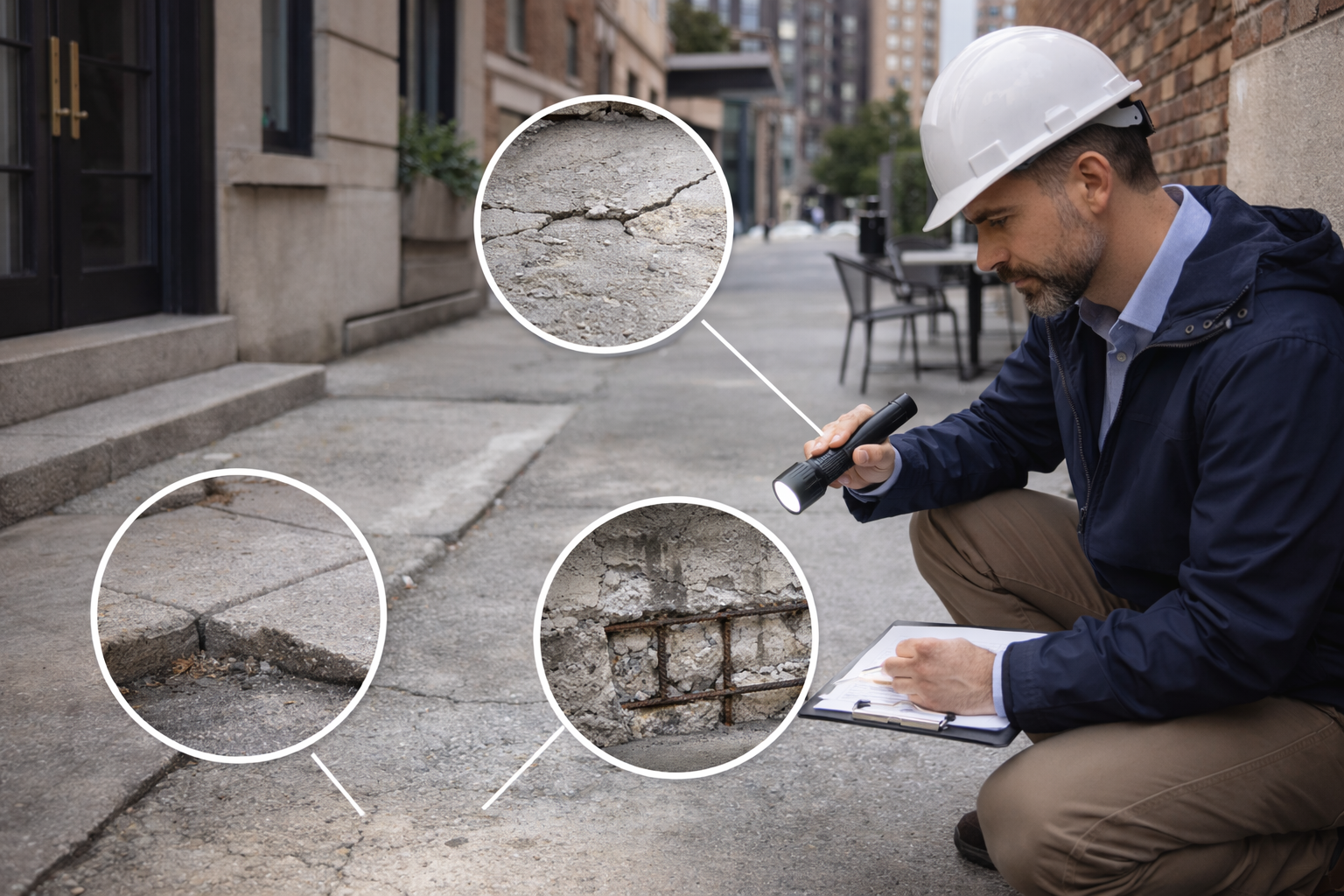
Hairline cracks are one of the most commonly ignored facade symptoms because they seem minor.
Sometimes they are minor. Sometimes they are the first visible sign that movement, moisture intrusion, or localized deterioration is starting to affect the wall system.
If I see thin cracks in brick joints, stone trim, stucco, parapet areas, or around window openings, I do not assume they are only cosmetic. In NYC facade work, small cracks often matter most when they:
- keep growing
- appear in clusters
- return after patching
- show up near corners, windows, or parapets
- are paired with staining or loose mortar
Under FISP terminology, conditions that are not yet dangerous but are likely to worsen can be classified as Safe With a Repair and Maintenance Program, which is exactly why these “small” issues deserve attention early.
Loose Masonry Is Never Something I Ignore
If I notice bulging brickwork, spalling brick faces, loose stone, shifting coping, or mortar that is falling out, I stop treating the facade as a cosmetic issue.
Loose masonry is where masonry restoration NYC and facade repair NYC stop being optional maintenance and start becoming a safety concern. Once masonry units or facade components lose secure attachment, the risk is not only water intrusion. It is also public safety.
NYC’s facade rules require immediate reporting of unsafe conditions by the Qualified Exterior Wall Inspector, and once unsafe conditions are identified, sidewalk protection or restricted access may be required.
So if I see any sign that masonry is separating, shifting, or shedding material, I do not wait for another freeze-thaw cycle or another heavy rain to see what happens.
Staining Is Often a Water Problem in Disguise
A lot of owners treat staining like a cleaning issue. I do not.
When I see dark streaks, rust-colored staining, white deposits, or recurring damp-looking patches on the facade, I think about water first. Staining often means moisture is moving through the wall assembly, and once moisture gets involved, facade deterioration tends to accelerate.
That matters because water is one of the biggest reasons a manageable condition becomes a larger facade restoration project in NYC later. Moisture can contribute to:
- cracked mortar
- brick spalling
- rusting embedded steel
- failed sealants
- interior leakage
- freeze-thaw damage in winter
If staining is repeated, spreading, or concentrated near joints, coping, sills, shelf angles, or parapets, I treat it as a warning sign, not just a surface blemish.
Failed Sealants Around Windows and Joints Are Easy to Underestimate
This is another area where property owners often delay too long.
Sealants around windows, expansion joints, coping joints, and transitions do not fail dramatically at first. They shrink, split, harden, pull away, or lose adhesion little by little. Because the joint is still “there,” it is easy to assume it is still doing its job.
But once sealant starts failing, water has a much easier path into the wall system. That can turn a simple maintenance item into a broader building exterior repair NYC issue involving surrounding masonry, interior damage, or repeated leaks.
If I see caulk or sealant that is:
- cracked
- brittle
- detached from one side of the joint
- missing in sections
- discolored and deteriorated
I do not treat that as a small finish issue. I treat it as an early waterproofing warning.
Parapets and Upper Facade Areas Deserve Extra Attention
One of the most overlooked truths in exterior maintenance is that some of the most important facade problems start where owners rarely look closely.
Parapets, cornices, upper masonry bands, copings, and decorative projections are exposed constantly and often show deterioration before lower wall areas do. CHK Construction’s own recent blog content specifically discusses NYC parapet observation requirements and ties fire escape certification timing to FISP cycles, which reinforces how closely upper-exterior safety issues connect to broader compliance and repair planning.
If I manage a building in NYC, I pay special attention to:
- open mortar joints at parapets
- cracked coping stones
- displaced caps
- rust stains near steel supports
- loose decorative elements
- recurring water marks below the upper edges
These are exactly the kinds of conditions that can stay out of sight until a report, leak, or violation forces action.
What “Safe for Now” Can Still Mean?
One thing that catches owners off guard is that not every facade issue has to be immediately unsafe to be expensive later.
Under FISP, a condition may be rated Safe with a Repair and Maintenance Program before it becomes Unsafe. That means the issue is not harmless. It means it has been identified as something likely to worsen if not addressed within the required timelines.
That is why early response matters so much. If I deal with deterioration when it is still localized, I usually have more options. If I wait until it is hazardous, I may be looking at:
- emergency stabilization
- sidewalk sheds
- DOB filings and follow-up
- broader masonry replacement
- larger labor and access costs
The Biggest Mistake: Waiting for Interior Leaks
A surprising number of owners only start taking exterior issues seriously once water shows up inside.
By then, the facade has often been telling the story for a while. Cracks, staining, open joints, failed sealant, and loose masonry usually show up before the interior complaint does. If I wait for a leak to confirm there is a problem, I am often already behind.
This is where facade repair NYC should really be viewed as preventive asset protection, not just emergency response.
Why NYC Owners Need to Think About Compliance Too?
In New York City, facade problems are not only maintenance issues. There are also regulatory issues for covered buildings.
The DOB states that buildings higher than six stories must have exterior walls and appurtenances inspected every five years and must file a technical facade report. The current facade rule was revised in 2021, and unsafe findings can trigger immediate protective actions.
That means if I own a covered building, catching conditions early helps me in two ways:
- I reduce the chance that ordinary deterioration escalates into unsafe conditions.
- I give myself more time to plan and budget repairs instead of reacting under pressure.
Where CHK Construction Fits In?
Based on its website, CHK Construction is positioned around exactly the type of work NYC owners often need when early facade issues start to show. The company says it provides facade restoration, masonry, concrete, roofing, and exterior-related construction work across the tri-state area and has published NYC-focused content about Local Law 11, DOB violations, parapet observation, and violation resolution.
That matters because facade problems in NYC are rarely just patch-and-go issues. They often sit at the intersection of:
- deterioration
- safety
- code compliance
- filing timelines
- access logistics
- repair budgeting
A contractor who already works in that environment is usually more helpful than one who treats the facade like a generic exterior wall repair.
What I Would Tell Any NYC Property Owner to Watch For?
If I wanted the practical version, I would tell owners and managers to start paying closer attention when they notice:
- hairline cracks that keep spreading
- mortar joints opening up
- loose or bulging brick
- spalling masonry
- recurring facade staining
- rust marks near embedded steel or shelf angles
- failed caulk or sealant around windows and joints
- parapet cracking or displacement
- water infiltration that keeps returning
None of these automatically means a major reconstruction project is coming. But each one can be the early stage of a much more expensive masonry restoration NYC or building exterior repair NYC scope if ignored.
Final Thoughts
If I own or manage a building in New York City, I do not want to wait until the facade problem becomes obvious from across the street.
By then, it is usually more expensive.
The better approach is to notice the quiet warning signs early: hairline cracks, loose masonry, staining, failed sealants, parapet deterioration, and repeated moisture evidence. In a city where facade safety rules require regular inspections for buildings over six stories, those small signs matter even more because they can affect both repair costs and compliance status.
And based on its current site and NYC-focused content, CHK Construction is clearly positioned to help with the kind of facade restoration, masonry restoration, and exterior repair work that property owners often need once those warning signs appear.