If you own an older building in Manhattan, Brooklyn, or across the river in Jersey City, those black iron stairs on the side of your property aren’t just architectural charm, they are a high-stakes legal liability.
I’ve stood on hundreds of fire escapes across the Tri-State area, and I can tell you: rust never sleeps. At CHK Construction, we see it all the time, a landlord thinks their fire escape is “fine” because it was painted five years ago, only to get hit with a surprise DOB violation or an insurance non-renewal.
In 2026, the rules are tighter than ever. Whether you’re dealing with NYC’s Local Law 11 (FISP) or New Jersey’s Uniform Fire Code, you need more than a handyman with a ladder. You need a certification that holds up in court.
The “5-Year Rule”: It’s Not a Suggestion
In both New York and New Jersey, the law is clear: Fire escapes must be inspected and certified every five years.
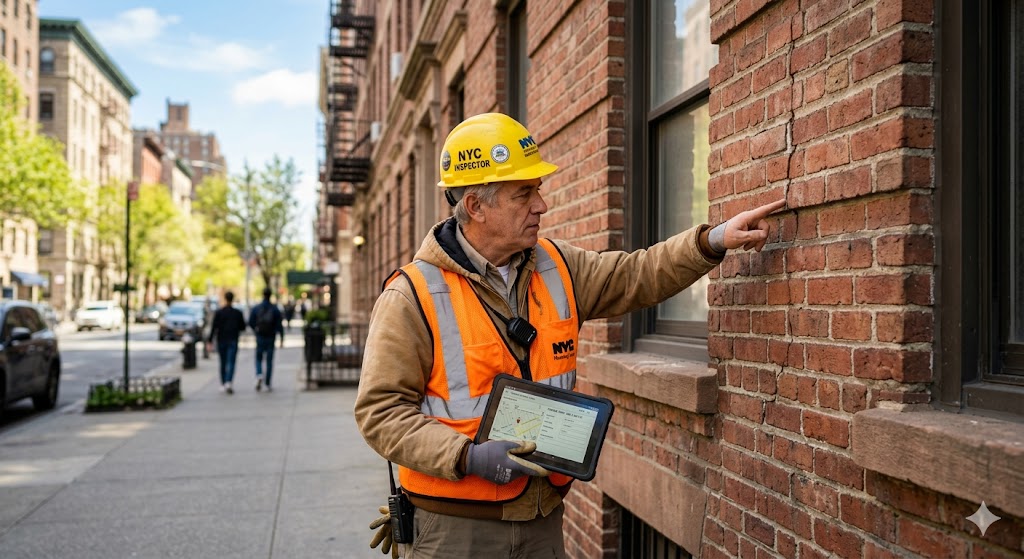
- In NYC: Under the Facade Inspection & Safety Program (FISP), buildings over six stories must have their “appurtenances” (that means your fire escape) inspected by a Qualified Exterior Wall Inspector (QEWI).
- In NJ: The State Uniform Fire Code (N.J.A.C. 5:70) mandates that fire escapes be examined and/or tested every five years by a professional engineer or a specialized fire escape technician.
If you don’t have a valid Certificate of Compliance on file, you aren’t just risking a fine, you’re risking the lives of your tenants and the total forfeiture of your insurance coverage if an accident occurs.
Why “Just Painting” Can Be a Trap?
I often see owners rush into fire escape painting in NYC to cover up rust before an inspection. Here’s the problem: paint is a protective layer, not a structural fix.
When we handle a project, we follow a strict technical protocol:
- Scraping & Wire Brushing: We remove every flake of loose paint and “scale” rust. If you paint over rust, you’re just trapping moisture against the iron, accelerating the rot.
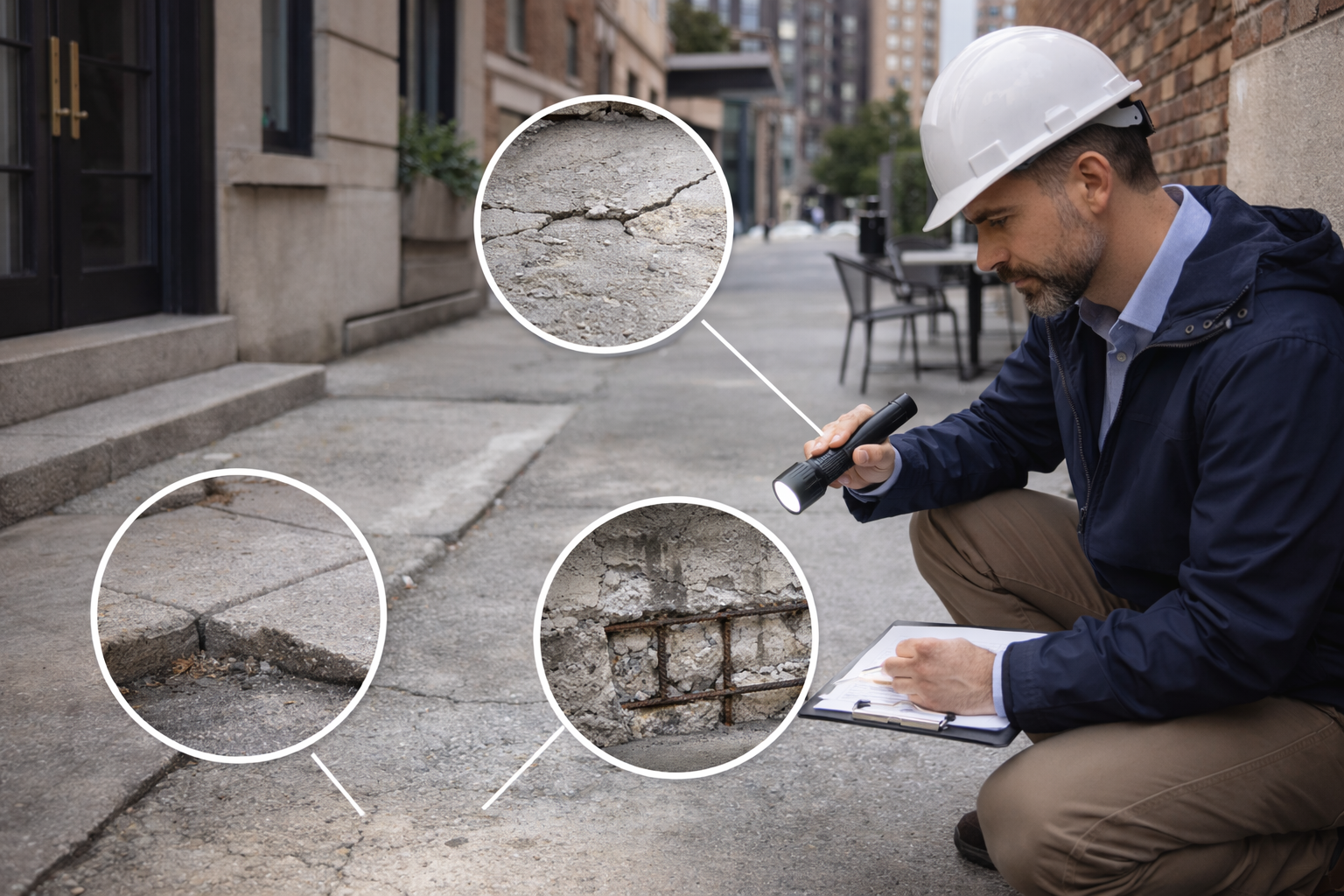
- Structural Integrity Check: We look at the “through-bolts” that anchor the escape to the brick. If the mortar around the anchor is crumbling, that fire escape is a death trap.
- Mechanical Testing: Does the drop ladder actually drop? Are the pulleys seized? We lubricate and repair all moving parts.
- Load Testing (If Required): If the structural integrity is in doubt, the city may require a load test (usually 100 lbs per square foot). We manage the weights, the gauges, and the engineering sign-off.
The CHK Difference: Paperwork + Performance
As fire escape certification specialists in NJ and NYC, we handle the headache. We don’t just fix the iron; we manage the filing.
- For NYC Landlords: We coordinate with your QEWI to ensure the repairs meet the “Safe” status for your Cycle 9 or Cycle 10 filings.
- For NJ Landlords: We provide the stamped affidavit required by the local fire official.
We use high-performance, rust-inhibitive coatings designed for the harsh Atlantic salt air and the freeze-thaw cycles of the Tri-State. When we’re done, your fire escape won’t just look good—it will be legal.
People Also Asked (PAA)
How often does a fire escape need to be certified in NYC? Every five years. This is usually done in conjunction with your FISP (Local Law 11) facade inspection if your building is over six stories. For smaller buildings, the NYC Fire Code still requires the owner to maintain the fire escape in a “safe and operational condition” at all times.
What is the penalty for a missing fire escape certification in NJ? Under the NJ Uniform Fire Code, failure to provide a 5-year certification can result in penalties of up to $5,000 per violation, per day. Additionally, the owner can be held liable for the actual costs of fire suppression if a faulty fire escape hinders firefighting efforts.
Can any contractor certify a fire escape? No. In NYC, the report must be filed by a Registered Design Professional (RDP). In NJ, it must be an engineer or a specialized fire escape company acceptable to the fire official. General “welding shops” often lack the specific insurance and structural credentials to issue a legal certification.
What is a fire escape load test? A load test involves placing static weights on the platforms and stairs to ensure the structure can support the weight of fleeing occupants. NYC and NJ codes generally require fire escapes to support a live load of 100 pounds per square foot.
Don’t Wait for the Violation
The City of New York and the State of New Jersey are ramping up inspections for 2026. If your certificate is expired or your stairs are showing “orange” through the black paint, it’s time to act.
Get your building back to “Safe” status. Request a Fire Escape Inspection from CHK Construction Serving NYC, Jersey City, Newark, and the surrounding Tri-State area.