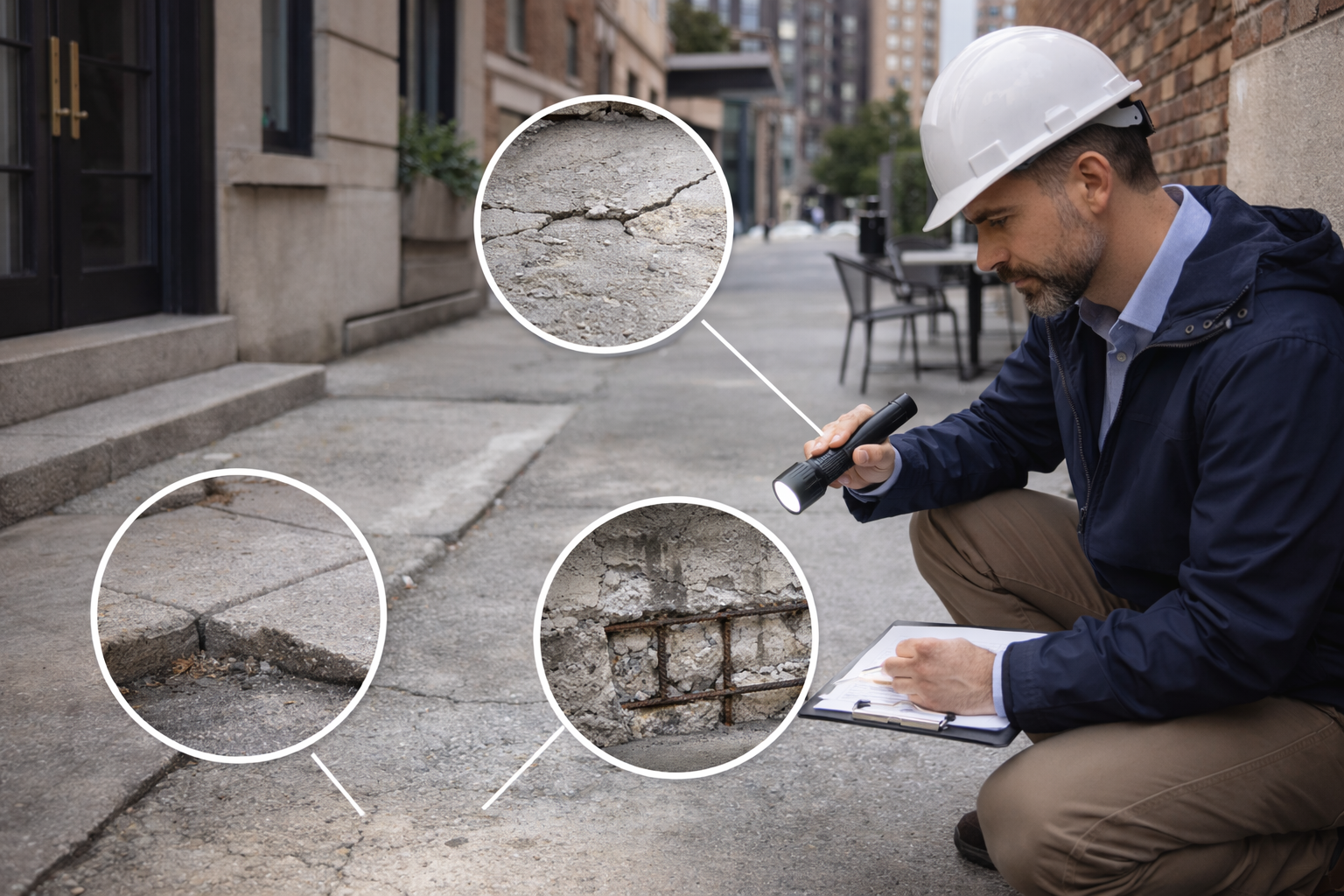
When New Yorkers walk down the street, they rarely look up at the very top edge of the buildings they pass. But if you’re a building owner, that top edge of the parapet wall should be at the front of your mind this year.
For a long time, parapets were the “out of sight, out of mind” part of a building. Unless you were already dealing with the five-year FISP cycle for a tall building, these roof-edge walls didn’t get much attention. That changed recently with a new NYC mandate that catches many owners off guard: Annual Parapet Observations.
At CHK Construction Corp, we’re helping owners across the city navigate these new rules while tackling the essential brickwork repair that NYC weather makes necessary. Here is why the parapet is no longer something you can overlook.
The New Rule: It’s Not Just for High-Rises Anymore
In the past, only buildings over six stories had to worry about formal facade inspections. However, under the newest NYC requirements (Local Law 126), nearly every building in the city with a parapet facing a public right-of-way must now be inspected annually.
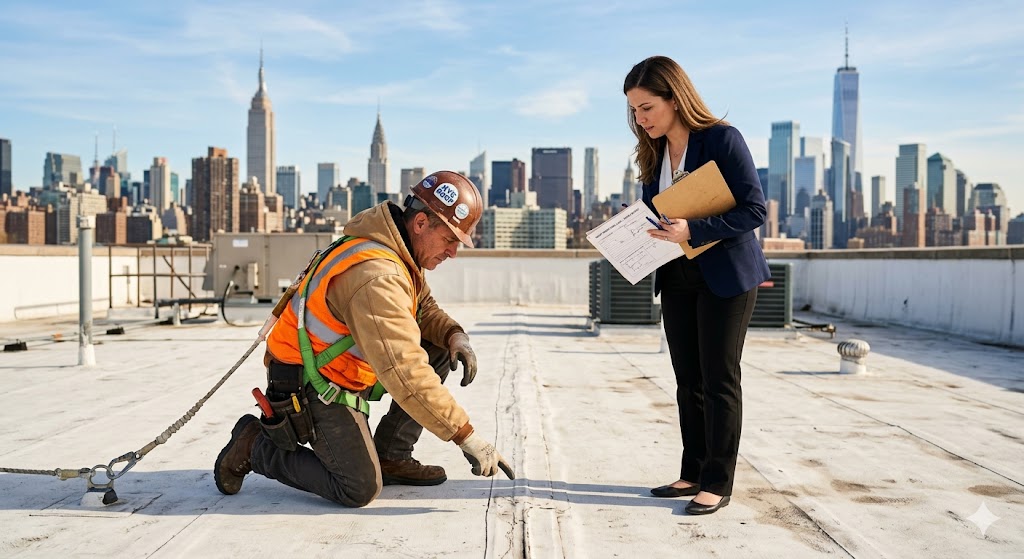
Whether you own a small three-story walk-up in Queens or a warehouse in Brooklyn, if your building has a wall that extends above the roofline and faces the sidewalk, you are required to have it observed every single year by December 31st.
Why Parapets Fail (The Science of the Skyline)
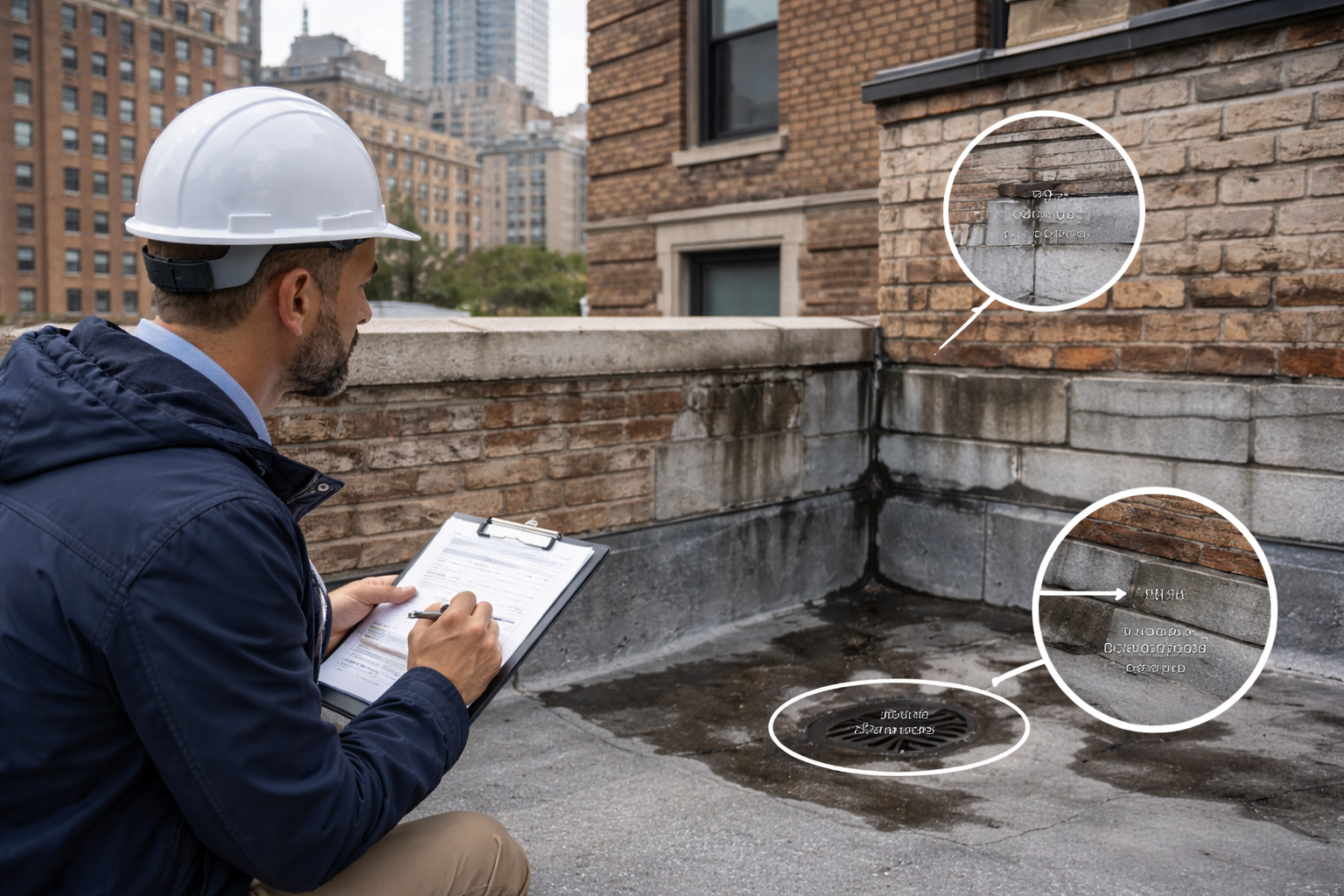
Parapets are the most exposed part of your building. They take the full force of NYC wind, rain, and the brutal freeze-thaw cycles of January and February. Because they have two “faces” exposed to the elements (the street side and the roof side), they are prone to specific issues:
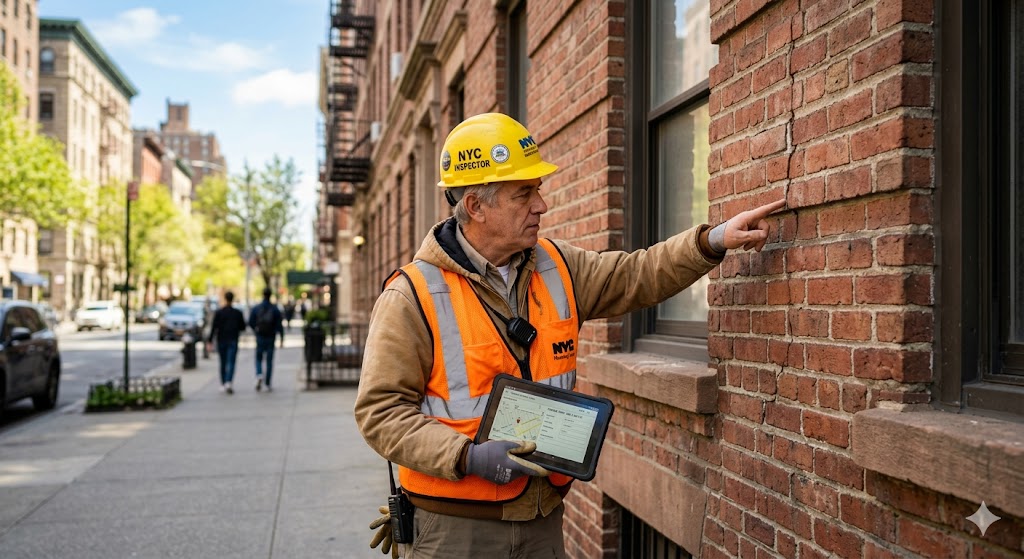
- Water Infiltration: Water often gets in through the “coping stone” (the cap on top of the wall). Once moisture is inside the brickwork, it freezes, expands, and pushes the bricks apart.
- Leaning or “Bowing”: Over decades, the constant pressure from wind and thermal expansion can cause a parapet to lean toward the street literally.
- Cracked Mortar: If the mortar joints are crumbling, the bricks become loose. In a high wind event, these loose bricks can become dangerous projectiles.
How to Stay Compliant (And Safe)?
The good news is that the annual observation doesn’t have to be a nightmare. Unlike the heavy FISP filings, you don’t necessarily have to submit a massive report to the DOB every year, but you must keep a signed report on file for six years. If an inspector knocks on your door and asks for your parapet records and you don’t have them, you’re looking at an immediate violation.
The goal of this law is proactive safety. By catching a small crack in your brickwork repair plan this year, you avoid the $20,000 emergency repair and the dreaded sidewalk shed next year.
FAQs About NYC Parapets
Do I need to hire a high-priced engineer for the annual check?
The city allows a “qualified person” to do these observations. This can be a professional engineer or architect, but it can also be a highly experienced mason or even a building superintendent who knows what to look for. The key is that they must be competent enough to identify structural hazards.
What happens if the inspector finds an unsafe condition?
If a parapet is deemed “Unsafe,” the person who saw it has to notify the DOB immediately (usually by calling 311). As the owner, you’ll need to put up public protection, like a sidewalk shed, and fix the problem within 90 days.
Are one- or two-family homes exempt?
Yes, fully detached one- and two-family homes are generally exempt from this specific annual mandate. However, if your home is part of a row (like a classic Brooklyn brownstone), you likely still need to comply because your walls are technically “attached.”
What exactly goes into the annual report?
The report needs to include basic building info, the name of the person who checked it, the date, and photos of the condition. It should clearly state whether the wall is “Safe,” “Unsafe,” or “Requires Maintenance.”
Don’t Wait for a Violation
If you haven’t had your parapet looked at yet, now is the time. At CHK Construction Corp, we don’t just “check boxes”; we understand the masonry of New York. We can help you perform your annual observation and, if we find issues, we can handle the brickwork repair NYC buildings need to stay standing for another century.
Keep your records clean and your tenants safe. It’s a lot cheaper to fix a mortar joint today than to deal with a DOB violation tomorrow.